


CIDON Interior Design & Contract participated in HIP – Horeca Professional Expo in the roundtable discussion “How to Make Your Hotel and Restaurant More Sustainable Through Design.” The session explored sustainability from a practical, real-world perspective applied directly to the hospitality sector.
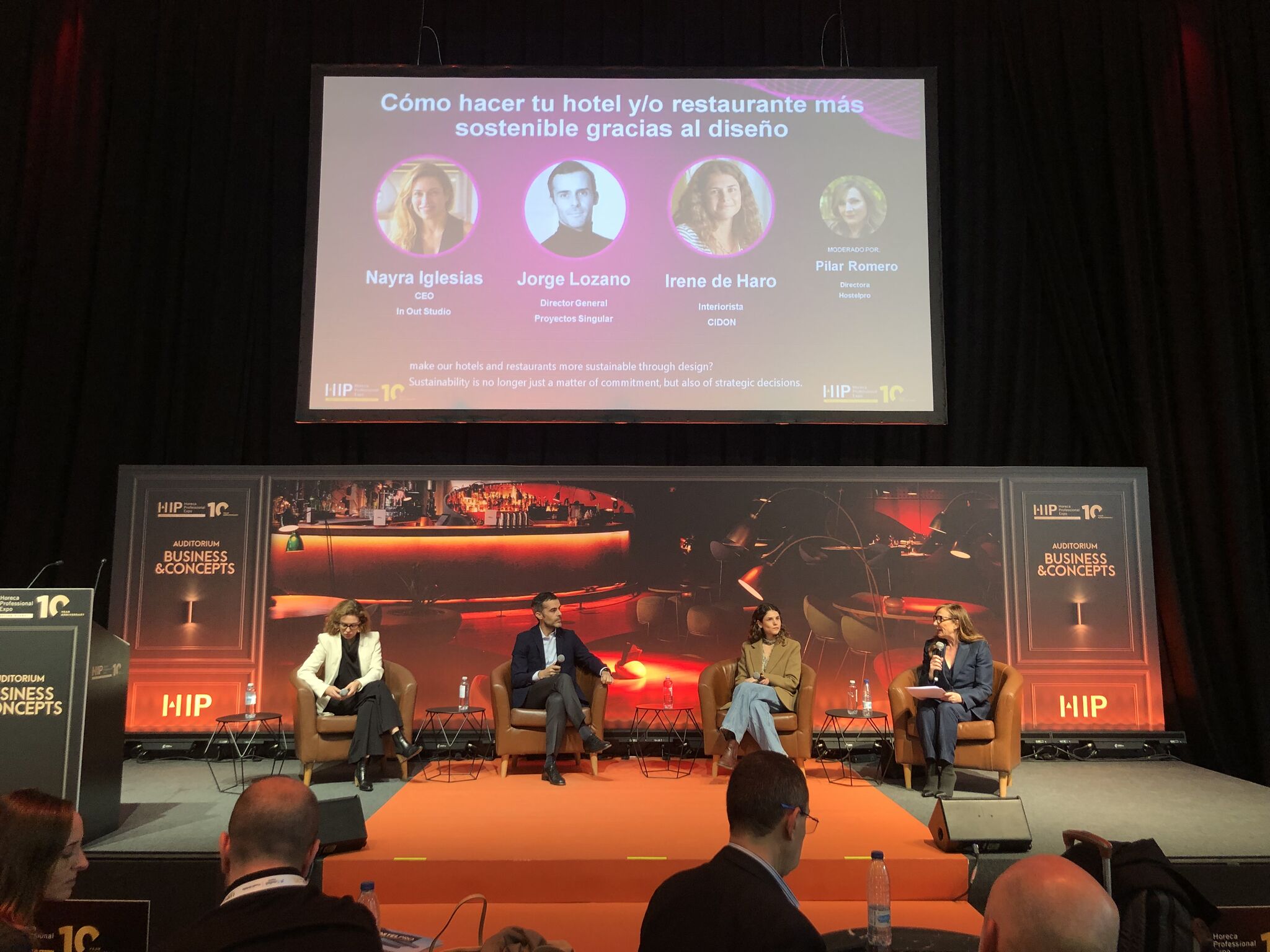
Nayra Iglesias, Jorge Lozano, Irene de Haro y Pilar Romero
Representing the design team, Irene de Haro shared insights grounded in hands-on hotel and contract projects, moving beyond theory to focus on concrete decisions that impact durability, logistics, and long-term profitability.
When a hotelier expresses the desire to create a more sustainable space, the conversation does not begin with selecting “green” materials. It begins with understanding the project in depth.
For CIDON, sustainable hotel design starts with three essential questions:
A space is truly sustainable when it does not need to be redesigned or replaced within a few years due to wear or changing trends.
Sustainability is not an aesthetic layer; it is a structural decision that affects layout, finishes, logistics, and the future maintenance of the asset.


One of the most relevant discussions focused on the difference between aesthetic sustainability and real sustainability.
Aesthetic sustainability is often associated with:
True hospitality sustainability involves:
In hospitality projects, the challenge lies in balancing budget, operations, and timelines.
Many sustainable solutions come with higher upfront costs. The key is deciding strategically where to invest. Elements such as a reception desk or a signature focal piece allow for the integration of distinctive materials without compromising the overall financial balance.
In contract projects, every replacement implies new production, additional transportation, and greater environmental impact.
Therefore, sustainability also means reducing future replacements.
“In many cases, making a one-time investment in a higher-quality material — even if it involves significant logistical costs — is more sustainable than opting for cheaper solutions that require replacement every few years,” added Irene de Haro.
Reducing future interventions is also sustainability. Responsible design requires coordinating design and execution from the very beginning to avoid cost overruns, errors, and duplication.


When discussing what matters most in a sustainable material — origin, durability, or maintenance — the conclusion was clear: in hospitality, durability and maintenance are decisive.
Designing a service trolley is not the same as designing a reception front desk. High-traffic environments demand materials that withstand intensive use without rapid deterioration.
The most sustainable material is the one that best resists real-life use within the project.
Sustainability is not measured solely by material origin, but by its performance throughout the full lifecycle of the space.
In one recent project on the southern Spanish coast, certified low-emission wooden panels were selected for interior areas. Beyond their aesthetic and acoustic value, these materials contributed to improved indoor air quality.
Such decisions demonstrate that sustainability is not always visible. Often, it lies in technical choices that directly impact user wellbeing and health.
“Not everything has to be new. In certain projects, reusing existing furniture has been a strategic decision that reduces environmental impact while adding identity. Understanding the patina, context, and history of a space allows sustainable solutions to strengthen the project’s narrative and optimize resources,” Irene added.
Sustainability can be found both in material innovation and in the reinterpretation of what already exists.


As a practical conclusion, three actions were highlighted that any hotelier or restaurateur can implement from the outset:
There is no single formula for achieving sustainability in hospitality.
Some projects benefit from technical and material innovation, while others find sustainability in local sourcing, reuse, or the reinterpretation of traditional solutions.
Sustainable design is that which adapts to the project and ensures its longevity.